One of the first questions people ask about dental implants is a practical one: how many times do I actually need to come in for this? It’s not just curiosity—it’s about planning around work, family, and everything else on your schedule.
The answer isn’t a single number, but in most cases, placing one implant takes a handful of visits spread out over a few months. That spacing isn’t because the appointments are long or complicated—it’s because part of the process happens between visits, while everything is healing.
At Riverstone Dental Care in Coeur d’Alene, Post Falls, and Hayden, ID, we usually map this out early on so you have a clear sense of what’s ahead and how each step fits together.
How Many Appointments Are Needed for a Single Dental Implant?
For most patients, a single dental implant involves about three to five appointments.
Some cases stay right in that range. Others add a visit or two depending on what the starting point looks like. The number matters less than understanding what each visit is for and why they’re spaced out the way they are.
- Bone support in the area
- The position of nearby teeth
- How everything lines up when you bite
Appointment One: Consultation and Planning
The first visit is where everything starts to come together. We take a close look at the area, review imaging, and figure out whether an implant is the right option.
We’re paying attention to:
If it’s been a while since your last visit, this often overlaps with a comprehensive dental exam. From there, we outline the plan so you know what to expect—not just the steps, but the timing between them.
Appointment Two: Implant Placement
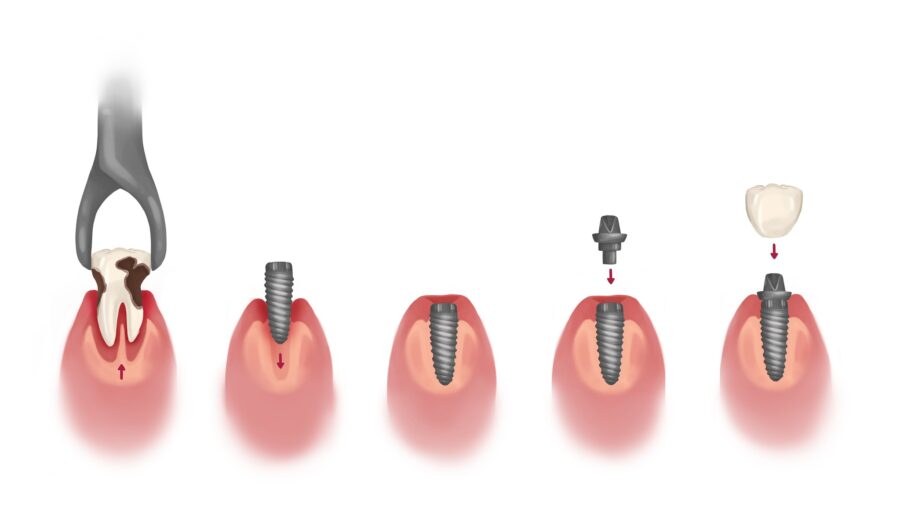
Once the plan is in place, the next step is placing the implant.
This is done during a minor procedure with local anesthesia. Most patients are surprised by how manageable it feels—closer to a routine dental procedure than something more involved.
After placement, the implant is left undisturbed so it can begin integrating with the bone.
The Healing Phase: What Happens Between Visits
This is the part that tends to feel the least visible, but it’s doing most of the work.
Over the next few months, the implant bonds with the surrounding bone. That connection is what gives it long-term stability, so we give it the time it needs.
You’re not coming in constantly during this phase, but we may check in depending on the case to make sure everything is healing as expected.
Appointment Three: Abutment Placement (Sometimes Needed)
In some cases, there’s an additional step where a small connector—called an abutment—is placed on the implant.
Not every implant requires a separate visit for this, but when it does, it’s usually a shorter appointment and part of preparing for the final crown.
Appointment Four: Final Crown Placement
Once healing is complete, the final step is placing the crown. This is the part that looks like a tooth. It’s custom-made to match your surrounding teeth so it blends in naturally. At this point, the implant is fully functional, and you can use it the way you would a natural tooth.
When Additional Appointments Are Needed
Some situations add a step or two, depending on where things are starting.
For example:
- A tooth extraction may be needed before placing the implant
- A bone graft may be recommended if the area needs more support
- A follow-up visit may be scheduled to check healing along the way
Bone grafting, in particular, comes up more often when a tooth has been missing for a while. The bone can change over time, and rebuilding that foundation helps the implant stay stable.
Why the Process Isn’t Rushed
It’s easy to look at the number of visits and wonder why it’s spread out. The reason is that the success of the implant depends on healing, not just placement. Giving the bone time to integrate with the implant is what allows it to function reliably long term.
Trying to speed that up doesn’t improve the outcome—it usually works the other way around.
How Dental Implants Fit Into Your Routine Care
Once everything is complete, the implant becomes part of your regular routine.
You’ll care for it the same way you care for your natural teeth:
- Brushing and flossing daily
- Keeping the surrounding gums healthy
- Staying consistent with cleanings and exams
We’ll also keep an eye on it during your visits to make sure everything remains stable.
Dental Implants in Coeur d’Alene, Post Falls, and Hayden, ID at Riverstone Dental Care
At Riverstone Dental Care in Coeur d’Alene, Post Falls, and Hayden, ID, our team takes a steady, step-by-step approach to implant treatment. The goal is to make sure you understand the process, know what to expect between visits, and feel comfortable with the timeline from start to finish.
If you’re considering a dental implant or want to talk through what the process would look like in your case, you can call the office or schedule a visit to get started.
Image from Authority Dental under CC 2.0